LLM Inference Cost Optimization: A CTO Playbook
- Tensorplay Engineering
- 23 Aug, 2026
- 02 Mins read
- Cost-optimization,Infrastructure
Where inference spend really comes from
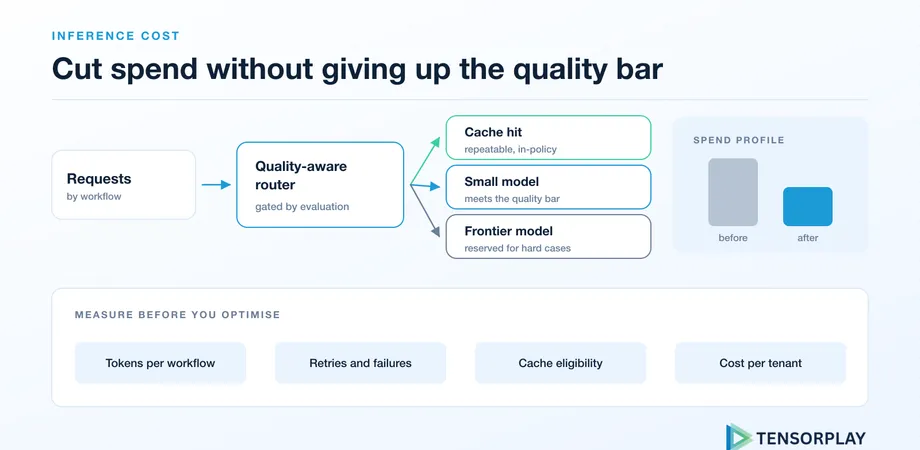
The most durable way to reduce LLM inference cost is to understand which workflows create value, then optimize their model, prompt, retrieval, cache, and infrastructure decisions without losing the quality users need. Cost reduction is a systems problem, not a single model swap.
Start by comparing the system against the AI production readiness checklist, especially its observability and rollout requirements.
1. Create a cost profile by workflow
Record request count, input and output tokens, model, latency, errors, retries, and user outcome for each workflow. Aggregate cost by customer or tenant where appropriate. This distinguishes a genuinely expensive path from a noisy dashboard total.
For API-hosted models, the OpenAI integration describes production controls such as rate-limit handling, streaming, cost tracking, and fallback behavior. Do not begin optimization until you can identify the workload that is driving spend.
2. Use quality-aware model routing
Build an evaluation set for each task and establish the cheapest model or configuration that meets the task’s acceptance criteria. Extraction, classification, and routing often have different requirements from a customer-facing reasoning workflow.
Use the LLM evaluation framework as the release gate for these decisions. Routing without evaluation only shifts cost into errors, retries, or manual cleanup.
3. Reduce unnecessary work
Examine prompt construction, duplicate requests, retrieval context, batching opportunities, and cache eligibility. Semantic caching can be useful for stable, repeatable questions, particularly when paired with well-designed vector retrieval such as Pinecone. It must respect tenant boundaries and content freshness.
Read our earlier analysis of reducing LLM inference costs for implementation patterns such as instrumentation, caching, and routing.
4. Choose infrastructure for the traffic shape
For sustained or specialized workloads, self-hosted inference or optimized GPU serving can be appropriate. Hugging Face supports model selection and deployment workflows, while AWS offers managed and custom infrastructure options. The correct choice depends on traffic, latency, operational capacity, data constraints, and evaluation results.
If AI spend is growing faster than the product value it supports, talk to Tensorplay about an infrastructure and cost review.
Frequently asked questions
Answers to common questions about this topic.
What is the first step in reducing LLM inference cost?
Does using a smaller model always reduce AI cost?
How can caching reduce LLM costs safely?
Related articles
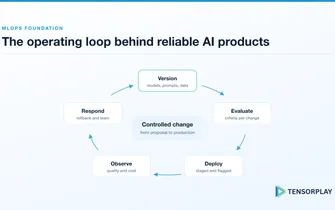
The MLOps Foundation CTOs Need for Reliable AI Products
The operating model behind reliable AI MLOps is the set of operating capabilities that lets a team c...
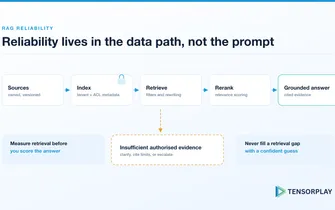
How to Make a RAG System Reliable in Production
The reliability boundary in RAG A reliable RAG system retrieves authorized, current, relevant eviden...
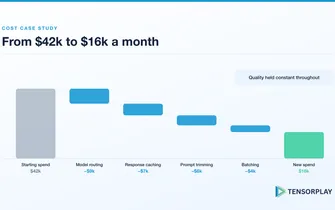
Reducing LLM Inference Costs by 60%: A Case Study
When a B2B SaaS company came to us, their AI features were a success story — too successful. Their m...
How Tensorplay can help
AI Infrastructure & Security
Build secure inference platforms with predictable performance and spend.
Discuss your project